
Why Rancho Verde in Tijeras Is One of Albuquerque’s Best-Kept Secrets
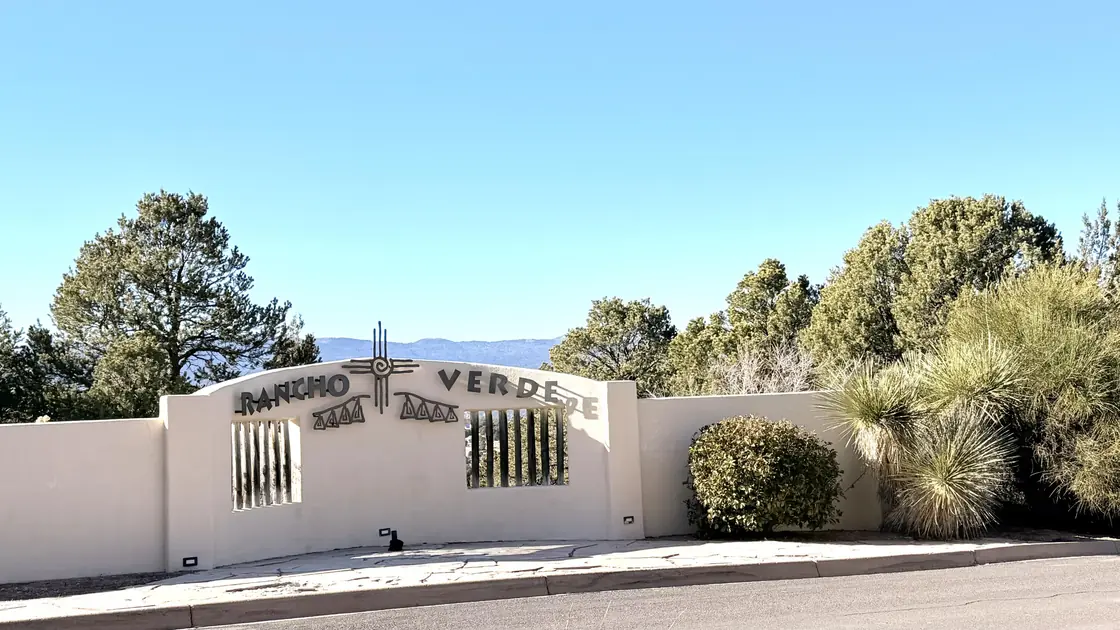
I’ve been selling homes in the Albuquerque metro for years, and one question comes up more than almost any other: “Where can I find real privacy without being an hour from everything?”
My answer usually surprises people. It’s not Corrales. It’s not the North Valley. It’s a 589-acre mountain community tucked between the Sandia and Manzano ranges that most Albuquerque residents have never even heard of.
It’s called Rancho Verde, and it sits just outside the Village of Tijeras — about 20 minutes east of downtown Albuquerque on I-40.
If you’ve ever driven through Tijeras Canyon and felt the city fall away behind you — the temperature dropping a few degrees, the piñon trees closing in, the sky somehow getting wider — then you already have a feel for what daily life is like out here. Rancho Verde just happens to be one of the best places to actually live in it.
The Setting: Mountains, Meadows, and Mature Piñon Forest
Rancho Verde is nestled at roughly 7,000 feet elevation in the East Mountains, a stretch of communities that includes Tijeras, Cedar Crest, and Sandia Park. The landscape here is nothing like the brown, flat mesa most people picture when they think of New Mexico. This is high desert forest — thick groves of piñon and juniper, rolling meadows, granite outcroppings, and views that stretch from Cedro Peak to the Sandia Crest.
The community itself covers nearly 600 acres, with 245 of those permanently dedicated as open space. That’s not a developer’s promise scribbled on a brochure — it’s land that will never be built on. Walking trails wind through it. Deer wander across it at dusk. On still mornings in October, the smell of roasting piñon and wood smoke hangs in the air like a greeting.
Lots here start at one acre, and many of the custom homes are set back into the trees far enough that you can’t see your neighbor from your driveway. If you’ve ever wanted to drink coffee on your patio and hear absolutely nothing but wind through the pines and maybe a Steller’s jay arguing with a squirrel — this is where that happens.
The History That Built This Place
The land around Rancho Verde has a deep human history. The Pueblo people lived in this canyon system since at least the 1300s — the Tijeras Pueblo Archaeological Site, just minutes from the community, is one of the most significant ancestral pueblo ruins in the region. You can walk its interpretive trail on any given Tuesday afternoon and stand where people ground corn and watched the same sunsets 700 years ago.
The Spanish arrived in 1540 and named the area “Tijeras” — scissors — for the way the Carnue and Cedro Canyons cut through the mountains like a pair of open blades. By the 1880s, homesteading families were working the land. By the 1920s, the old wagon trail had become Highway 470, which eventually folded into Route 66. That stretch of old Route 66 is still there, just five minutes north of Rancho Verde.
The community was developed with an intentional philosophy: custom homes on large lots, protected open space, paved roads, underground utilities, and covenants that preserve the character of the neighborhood without micromanaging every shingle color. It’s structured enough to protect your investment and loose enough to let people actually live.
What It’s Actually Like to Live Here
I get asked this one a lot, so let me be specific.
The commute to Albuquerque is about 20 minutes. You’re on I-40 in under five minutes from most lots. Head west through Tijeras Canyon and you’re at Tramway in 12-15 minutes, downtown in 20, Uptown or the hospitals in 25. It’s a reverse commute — you’re going against traffic in the morning.
Groceries and essentials are close. Cedar Crest has a Smith’s grocery store, banks, gas stations, and restaurants. It’s a five-minute drive. You’re not living in the wilderness — you just feel like you are.
The food scene is better than you’d expect. Roots Farm Cafe in Tijeras sources from local farms. Rumor Brewing in Cedar Crest does brick-oven pizza with mountain views and a solid Belgian ale. Burger Boy’s green chile cheeseburger is regularly cited as one of the best in the state. And Molly’s Bar — a Route 66 roadhouse that’s been open for decades — has live music on the patio most weekends.
The outdoor access is unmatched. The Cibola National Forest stretches across two million acres and surrounds this area. The Turquoise Trail — a 65-mile National Scenic Byway running from Tijeras to Santa Fe — begins right here. You can be on a hiking trail in five minutes, at Sandia Peak Ski Area in twenty, or at the world-class Paa-Ko Ridge Golf Club in ten.
Temperatures run 10-15 degrees cooler than Albuquerque. At 7,000 feet, summers are comfortable — mid-80s, not the triple digits that Denver and Phoenix endure. Winters bring snow, which is part of the appeal. You get genuine seasons without the brutal extremes.
The Kind of Homes You’ll Find Here
This is not a tract development. Every home in Rancho Verde is custom-built, and the designs reflect that — you’ll see Southwest adobe styles next to contemporary mountain homes, timber-frame lodges next to clean-lined modern builds. Lot sizes start at an acre, which means space between homes, real yards, room for a shop or studio, and enough buffer from your neighbors that the word “privacy” actually means something.
The homes that trade here tend to fall in the upper range for the East Mountains — this is one of the more upscale communities in the area. But compared to what buyers coming from Colorado, California, or Texas are used to paying, the value is startling. A custom 4,000+ square foot estate on over an acre of wooded land, with solar panels and a six-car garage, might list around a million dollars. In Denver’s foothills, Scottsdale, or anywhere near the coast, you’d be looking at two to three times that.
Currently on the market: 14 Teypana Drive — a custom single-story estate with 4 bedrooms, 4 bathrooms,
4,425 sqft on 1.13 acres. Features a 6-car garage, rooftop observation deck, owned solar panels, chef’s
kitchen, outdoor spa, and covered patio with wood-burning fireplace. Seller financing available.
View listing: albuquerquehomesonline.com/Tijeras/14-Teypana-Drive-id20381
Who’s Moving Here — and Why
Over the past few years, I’ve noticed a real shift in who’s buying in Rancho Verde and the broader East Mountains. It used to be primarily local move-up buyers and retirees. That’s still part of the mix, but increasingly I’m working with remote tech workers from Denver and the Bay Area, semi-retired couples from Texas who want mountain air and more space, and creative professionals from places like Portland and Asheville who are drawn to New Mexico’s art and culture scene.
What they all have in common is that they’ve done the math. They realize they can sell a 1,500-square-foot townhouse in a high-cost market, buy a custom mountain estate with cash to spare, and still be 20 minutes from a metro area with a major airport, research university, and two national labs.
The seller financing option that some properties here offer makes this even more accessible — especially for self-employed buyers or people in between real estate transactions who don’t want to deal with traditional bank timelines.
The Part Nobody Talks About: What You Give Up
I believe in honest marketing, so here it is. Rancho Verde is not for everyone.
If you want walkable urbanism, coffee shops on every corner, or a five-minute drive to Target, this is not your neighborhood. The nearest big-box stores are in Albuquerque. You need a car. You’ll want a vehicle with decent ground clearance for the occasional snow day, though the roads are paved and well-maintained.
There’s no natural gas line — most homes use propane, wood-burning stoves, pellet stoves, or heat pumps (which, in this climate, work extremely well and keep energy costs low). Water is private well or community water system, not Albuquerque city water. And cell signal can be spotty depending on where your lot sits relative to the ridge, though most residents have home internet via fixed wireless or satellite.
If you’re someone who trades nightlife for night skies, though, those tradeoffs feel less like sacrifices and more like upgrades.
Why I Keep Coming Back to This Community
I’ve sold homes all over the Albuquerque metro. I love the North Valley, I appreciate the convenience of the West Side, and the Heights have great neighborhoods. But when clients tell me they want the feeling of escape — like they’ve left the noise behind without actually leaving the metro — Rancho Verde is the first place I take them.
It’s the combination that’s hard to beat: the protected open space, the elevation, the mature forest, the quality of the homes, and the proximity to everything in Albuquerque without any of the density. It genuinely feels like a secret, even to people who’ve lived in ABQ for years.
The East Mountains have been growing steadily, and communities like this don’t stay under the radar forever. But right now, the value is exceptional — and the lifestyle is something you really can’t replicate anywhere closer to the city.